


How Much Should You Keep in an Emergency Fund in Nigeria?
Learn how to set an emergency fund target based on your real expenses, income and financial responsibilities.
An emergency fund becomes important when something goes wrong, and you realise you have no money set aside to deal with it.
Your phone could need an unexpected repair, your income could be delayed, or an urgent expense could come up without warning. When that happens, the challenge is not only finding the money. It is finding it without disrupting everything else you already planned to pay for.
That is what an emergency fund is designed to help with. It gives you money to fall back on when an unexpected financial need comes up.
But how much should you actually keep in one?
How much should you save for emergencies?
You will often hear that you should save three to six months of expenses. That can be a useful benchmark, but your emergency fund should reflect your own income, responsibilities and monthly commitments.
Start by calculating the expenses you would still need to cover if something affected your income.
For example:
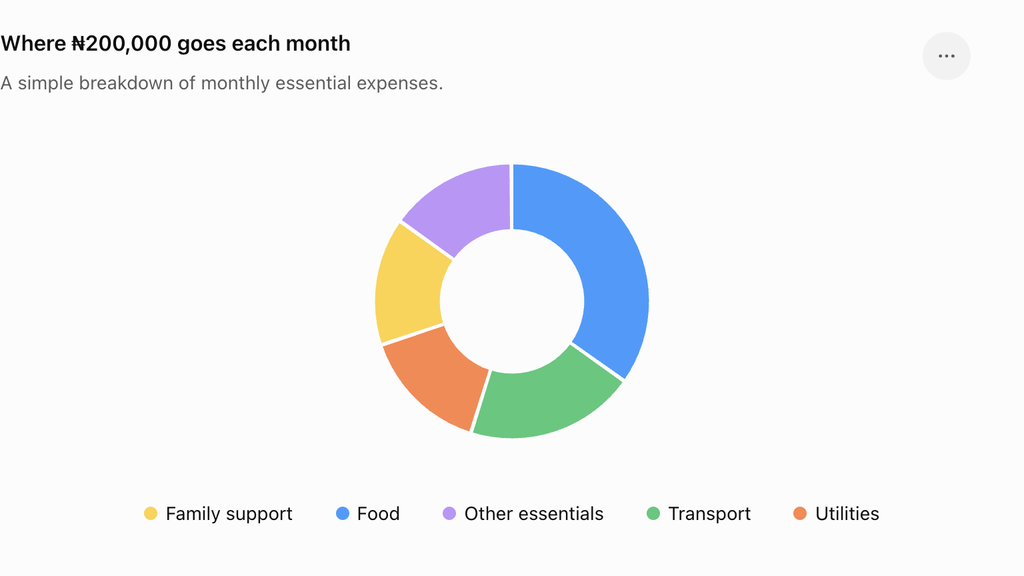
If your essential monthly expenses come to ₦200,000, then:
3 months = ₦600,000
6 months = ₦1.2 million
That gives you a useful range to work towards.
You do not need to reach ₦1.2 million before your emergency fund becomes valuable. Your first target could be ₦100,000, followed by ₦250,000 and then one month of essential expenses. What matters is continuing to build it.
What actually counts as an emergency?
An emergency is an urgent financial need that you did not reasonably expect or budget for, such as an unexpected repair, sudden loss of income or an urgent expense that cannot wait.
A planned holiday is not an emergency. Neither are school fees you knew were coming or a new phone you want to buy.
Being clear about what qualifies as an emergency can make it easier to protect the money you have saved.
Should you keep your emergency fund separate?
It can help.
When emergency savings sit in the same account you use for everyday spending, it is easier to dip into the money without thinking much about it.
A separate savings structure can create some distance between money you need today and money you are keeping for an unexpected situation.
Kredi has several savings options with different structures. Kredi Vault is a fixed savings option with a minimum of ₦5,000 and up to 20% interest over a three-month duration. Kredi Safelock offers 18% interest from a minimum of ₦1,000, with a minimum duration of 30 days, and keeps the savings locked until the due date while allowing top-ups and auto-recurring deposits.
The right option depends on when you may need the money.
Build your emergency fund gradually
Start with what you can manage.
If you can save ₦25,000 every month, you would have ₦150,000 after six months, before any interest earned. A bonus, freelance income or other unexpected money can also help you increase the balance when it comes in.
The goal is not to prepare for every possible financial problem. It is to make the next unexpected expense less disruptive.
Looking to start an emergency savings fund? Explore Kredi’s savings options and choose one that fits how and when you may need the money.
