


Fixed Deposit vs Locked Savings in Nigeria: Which Option Fits Your Goal?
Fixed deposit or locked savings? Learn how each works, what to consider and which option may suit your savings goal in Nigeria.
Sometimes, the hardest part of saving is not putting money aside. It is keeping your hands off it once it is there.
You save ₦100,000 with a specific goal in mind, but then an unexpected expense comes up. Maybe you see something you have wanted for a while, or you convince yourself that you can take some of the money now and replace it later.
This is where structured savings can help. Fixed deposits and locked savings both create some distance between your savings and everyday spending, but they work differently and may suit different financial goals.
What is Fixed Deposit?
The idea is straightforward: instead of keeping the money in an everyday account where it can easily be spent, you put it somewhere with a defined duration and a clear savings purpose.
A fixed deposit is money you place with a financial institution for a specified period, usually at an agreed interest rate. The money stays committed for that period and becomes available according to the product’s terms.
Kredi Vault is a fixed savings option where customers can save from ₦5,000 and earn up to 20% interest over a three-month duration. The funds are withdrawable when due, subject to the applicable product terms.
This can be useful when you already know you will not need the money for a period of time and want some structure around your savings.
What is Locked Savings?
Locked savings also helps create a boundary around your money, but the product terms can be different.
Kredi Safelock, for example, offers 18% interest from a minimum of ₦1,000 and requires a minimum duration of 30 days. The savings remain locked until the due date, while customers can still top up and use auto-recurring deposits.
When comparing fixed deposits and locked savings, do not look only at the interest rate. Consider the full structure of the product, including how long the money is committed, how much you need to start, and what access or top-up options are available.Fixed deposit vs locked savings: which one should you choose?
Start with the purpose of the money.
Suppose you are saving ₦300,000 for an expense you expect to pay in three months. Keeping that money in your regular spending account may make it easier to dip into before the deadline.
A fixed or locked savings option can create a useful boundary and help you stay committed to the goal.
On the other hand, if you may need access to the money at short notice, locking it away may not be the right choice.
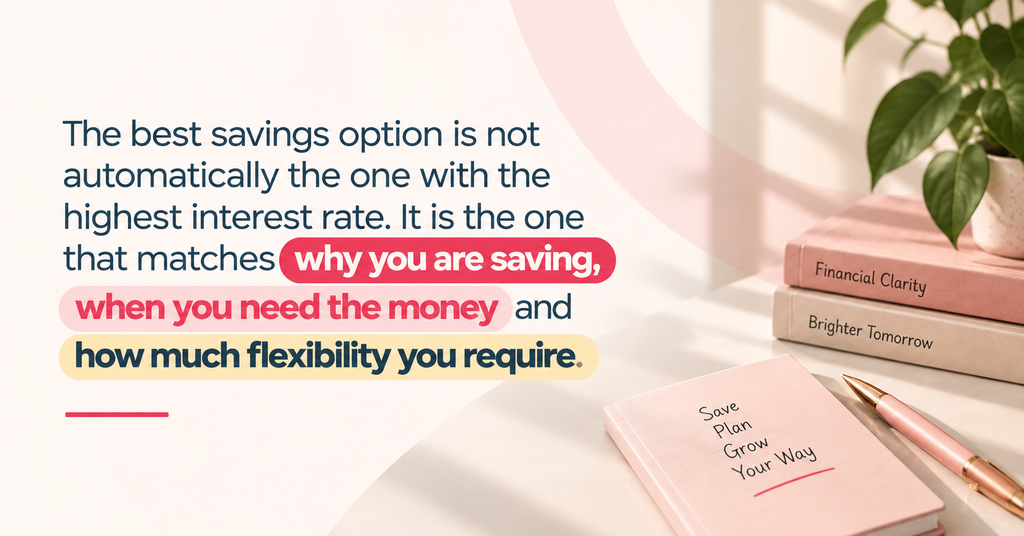
What should you check before choosing a savings option?
Before committing your money, look at:
Interest rate: How much does your money earn?
Duration: How long will the money remain committed?
Access: When can you withdraw?
Minimum amount: How much do you need to start?
Flexibility: Can you top up your savings?
Automation: Can you set up recurring contributions?
Terms: What conditions apply to withdrawals or other changes?
These details can affect how useful the product is for your particular goal.
Make the savings structure fit the goal.
You do not have to keep every type of savings in the same place.
You might keep an accessible buffer for unexpected expenses while putting money for a medium-term goal into a structured savings option.
Kredi provides several savings options designed for different needs, including Kredi Vault, Kredi Safelock, Target Savings and Kiddyvest.
The right question is not simply, “Which savings option is best?”
It is, “Which savings option makes the most sense for this money?”
That shift can help you choose a savings structure that fits your goal, timeline and financial habits.
